

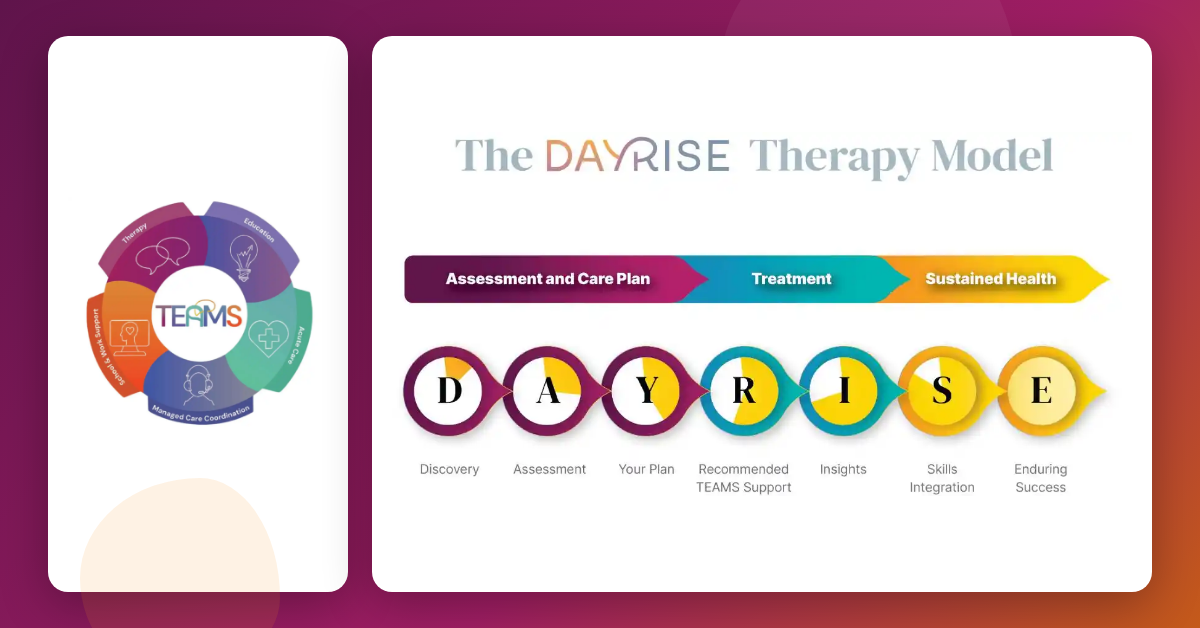
Therapy helps most when support continues after the session ends. TEAMS™ is the care model Dayrise built to make that happen. Every client gets a plan for therapy and a plan for daily life.
Watch: Jami Aitken explains TEAMS™
Jami Aitken, LCSW, Director of Clinical Services at Dayrise Wellness, walks through the model in this short video.
Where TEAMS™ came from
Our founders know what it feels like when the mental health system fails a family. When their son started struggling in high school, they spent years navigating insurance, coordinating with his school, trying to understand what therapy was doing, and figuring out what they could do at home to help. Nothing connected. Eventually they each took six months off work just to keep up.
When things settled, they looked at each other and said there had to be a better way — one where everyone involved in a client’s care is working from the same plan, speaking the same language, and moving in the same direction. TEAMS™ is built to do exactly that.
Why weekly sessions need more support
Weekly therapy is valuable. It also covers one hour of a 168-hour week. The other 167 hours happen at home, at school, and at work. That is where stress shows up and where new skills get tested.
Other areas of health already work this way. Care for diabetes and heart conditions involves a team of people and a plan that reaches into daily habits. Mental health care can work the same way.
Two plans for every client
TEAMS™ gives each client two plans.
The therapy plan is the path you follow with your therapist each week. It names a recommended approach and lists the skills that build resilience and strength.
The care plan covers lifestyle, behavior, and support recommendations for daily life. These steps make therapy more effective. They also help you handle challenges as they come up, which builds a stronger base for long-term wellness.
The goal: you learn to see challenges coming and handle them on your own. Then you can live the life you choose.
The DAYRISE Path: your map through therapy
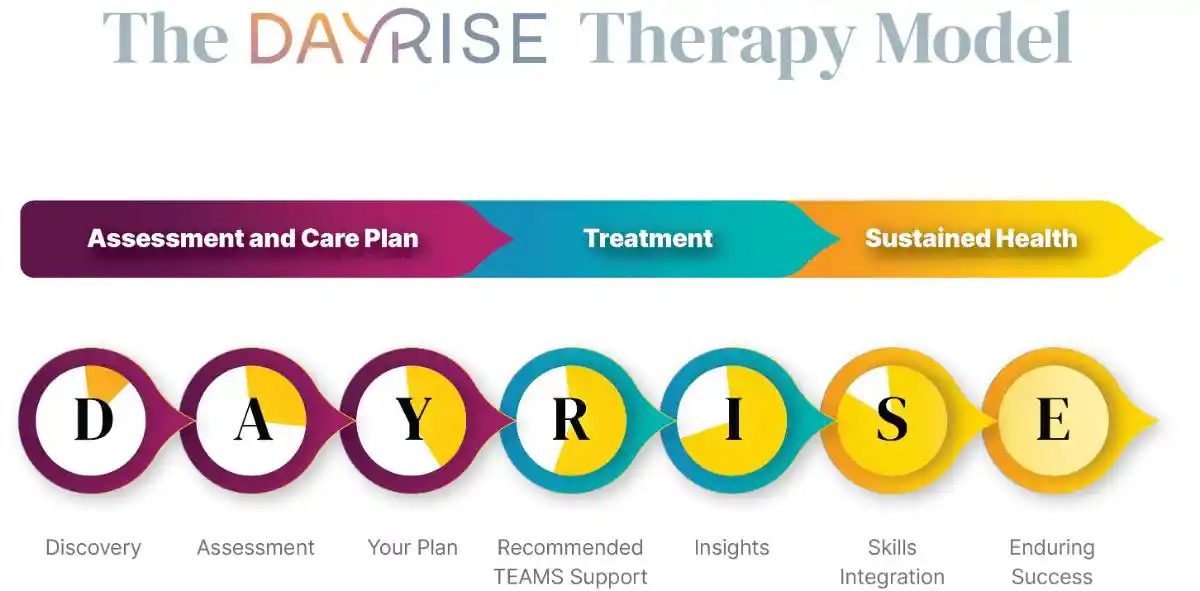
One of the hardest parts of starting therapy is not knowing where you are or what comes next. The DAYRISE Path solves that. Every client moves through seven stages across three phases, so the destination is always clear.
Phase I: Assessment and Care Plan
D: Discovery
Your Care Coordinator clarifies your needs, confirms access, and matches you with the right therapist.
A: Assessment
Your therapist connects symptoms, functioning, strengths, and risk factors with what you want to get out of therapy.
Y: Your Plan
Together you agree on goals, the TEAMS supports that will help you, and how progress will be reviewed along the way.
Phase II: Treatment
R: Recommended TEAMS Support
Therapy begins and your full care plan activates. The right people and services come together around your goals.
I: Insights
Each session recognizes your wins, assigns practice for the week ahead, and reviews what you are learning about yourself.
Phase III: Sustained Health
S: Skills Integration
The focus shifts to how you are using new skills in real life — at home, at school, at work.
E: Enduring Success
Goals and final measures are reviewed. A discharge success plan is built so you leave prepared, not just finished.
The Five Parts of TEAMS™
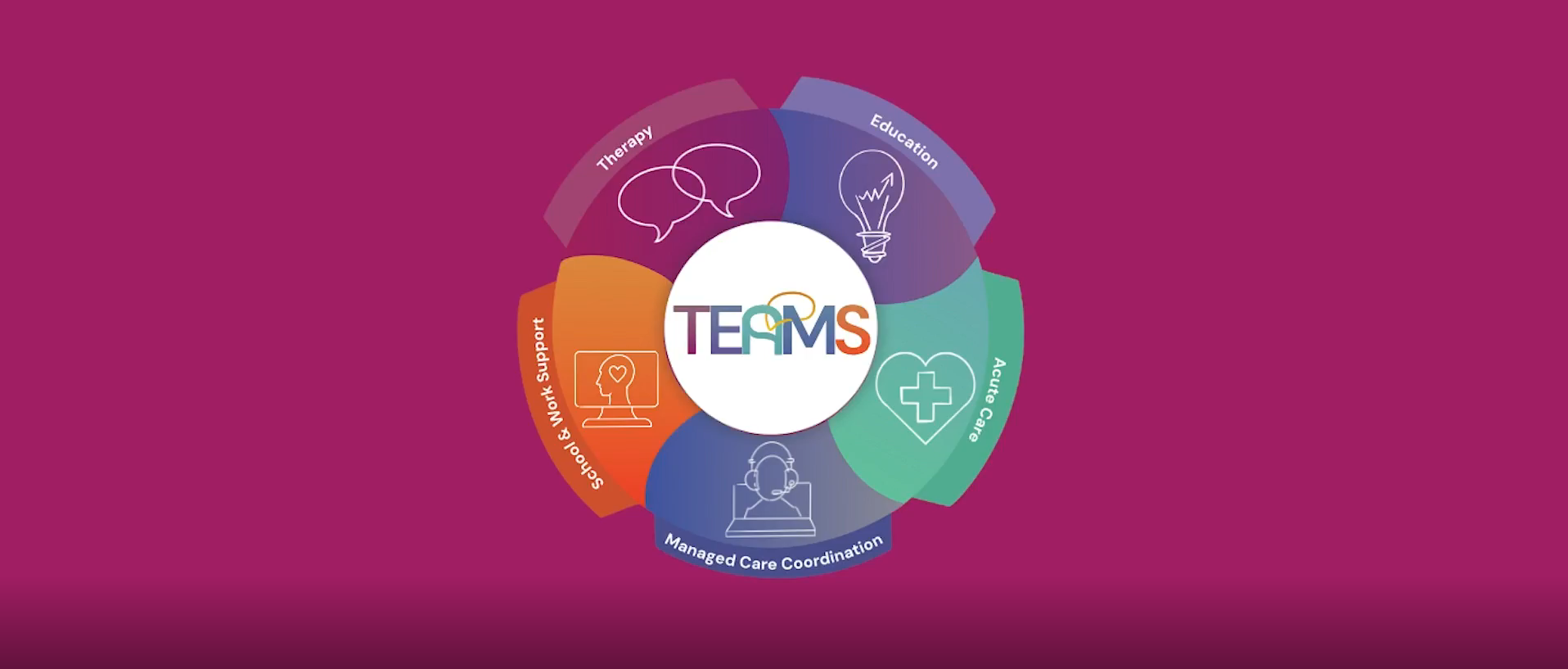
Each letter in TEAMS™ stands for one part of the care plan.
T: Therapy
Your individual sessions focus on skill building and emotional regulation. Your therapist also looks at the full picture — whether you might benefit from group therapy, family counseling, medication evaluation, neuropsychological testing, or other services — and helps connect you with the right people from the start.
E: Education
You and your support system get resources that help outside of therapy. Understanding how and why a skill works makes it easier to use. This is not a one-time orientation. Education runs throughout your entire course of treatment.
A: Acute Care
Some needs cannot wait for the next session. Acute care covers urgent situations and lays out a clear path to higher levels of care — like PHP or IOP — when needed. When a step-up happens, Dayrise shares your TEAMS™ plan with the receiving team so nothing falls through the cracks.
M: Managed Care Coordination
Dayrise handles the logistics: insurance, session scheduling, and access to other providers. This frees you to focus on your care instead of managing the system. Care coordinators are the people who make everything work behind the scenes, and they take that job seriously.
A: Assessment
Your therapist connects symptoms, functioning, strengths, and risk factors with what you want to get out of therapy.
S: School and Work Support
Progress depends on the places where you spend your days. Dayrise works with schools and employers to build plans that extend beyond the therapy room. That can mean sitting down with a school’s attendance team, helping set up a 504 plan or IEP, or developing strategies that make school or work feel manageable again.
Bringing your whole care team together
One of the most common problems in mental health care is fragmentation. The therapist is doing one thing, the psychiatrist is doing something else, and the school or employer has its own plan. The client — or the parent — ends up in the middle trying to coordinate everyone.
TEAMS™ is designed to change that. It brings together the full picture: therapist, support people (a parent, spouse, or close friend), medication providers, and specialists like dietitians or social workers. Everyone works toward the same goal. Dayrise manages the communication so that burden does not fall on you or your family.
It is exactly what our founders needed when their son was struggling, and what they had no way to access at the time.
Your TEAMS™ Card
At the end of every session, you leave with a TEAMS™ Card. It captures three things: a win from the past week, your focus for the week ahead, and a self-care tip. It keeps the work going between sessions and gives you something concrete to hold onto.
What the Data Shows
Dayrise measures outcomes consistently using PHQ-9 and GAD-7 assessments, two of the most widely used tools in mental health care. For clients who reach their treatment goals, improvement rates reach approximately 75% for depression and 88% for anxiety. That is the work that TEAMS™ and the Dayrise Path are designed to support.
Dayrise tracks early engagement, session continuity, and discharge outcomes — not just client satisfaction. The goal is to understand whether care is actually working, not just whether clients feel good about their experience.
What Clients Tell Us
Clients say TEAMS™ gives them a more complete road map and a stronger foundation for lasting success. When you practice new skills in daily life, you manage challenges better and succeed in the places that matter to you.
Common Questions about TEAMS™
What does TEAMS™ stand for?
Therapy, Education, Acute care, Managed care coordination, and School and work support.
Does everyone get all five parts?
No. Each plan reflects individual needs. All five parts are available if your needs change.
How is the care plan different from the therapy plan?
The therapy plan is the path you follow with your therapist each week. The care plan adds lifestyle, behavior, and support recommendations for daily life.
What is a TEAMS™ Card?
A brief summary you receive after every session: a win from the past week, your focus for the week ahead, and a self-care tip.
Who helps with insurance and scheduling?
The managed care coordination part of TEAMS™ covers insurance, session scheduling, and access to other providers.
Take the next step
Want to know what a TEAMS™ plan could look like for you or your family? Book a free consultation or call (331) 425-8625. Our Care Coordinator will talk with you first and help you find the right therapist.
Clinically reviewed by Jami Aitken, LCSW, Director of Clinical Services at Dayrise Wellness